
Artificial Flower Sea Freight Packing
See how Everbloom packs artificial flower sea-freight orders, from inner boxes and carton marks to FCL/LCL planning and damage control.
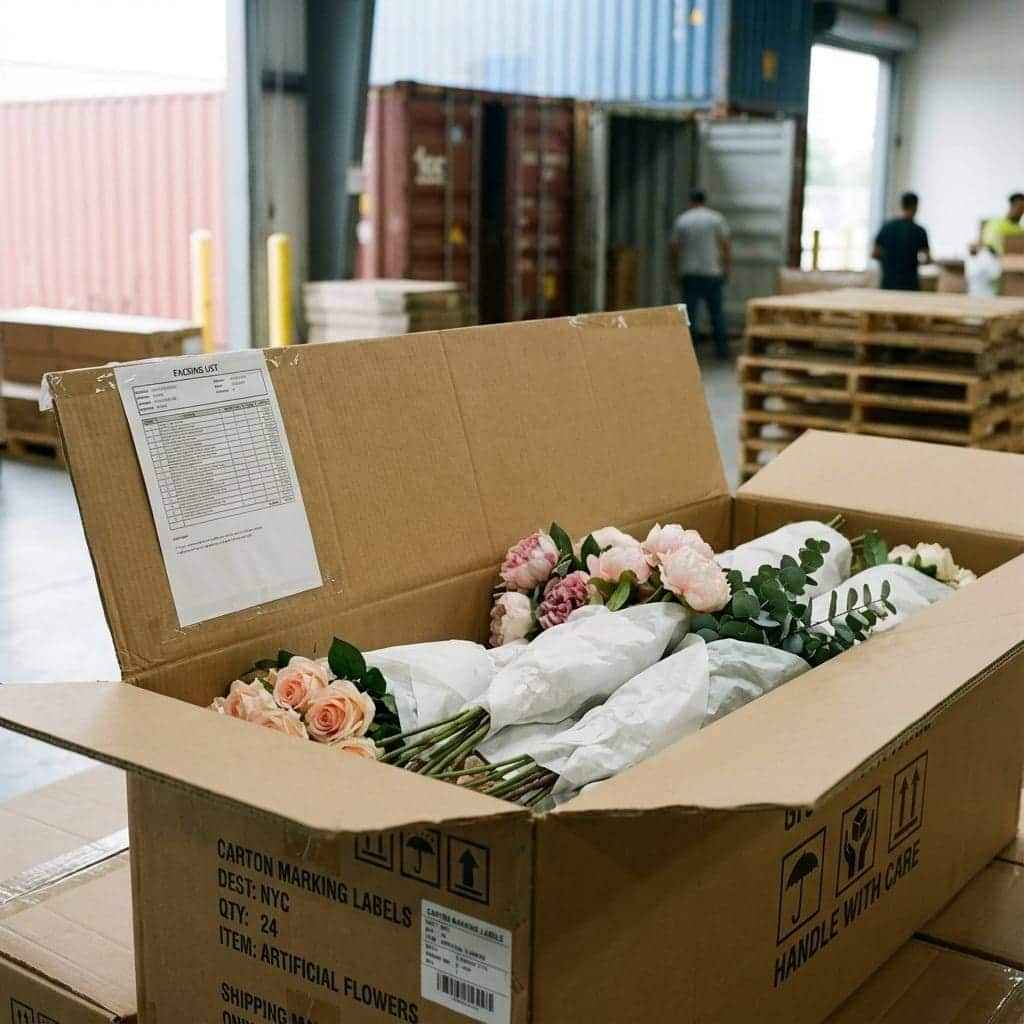
Why Sea Freight Packing Matters
Artificial flowers are durable in daily use, but they are shape-sensitive during export. Poor packing can cause bent stems, crushed petals, color transfer, dust contamination, and slow recovery after compression. For wholesale buyers, packing is not a small operational detail. It affects sell-through, claims, inspection results, and the buyer’s ability to receive a clean, organized shipment.
At Everbloom Florals, packing is planned around the product type, carton configuration, destination, and whether the order ships by FCL or LCL sea freight.
Key Takeaways
- Artificial flowers need shape protection, not only basic carton strength.
- Inner boxes reduce movement and help buyers identify SKU/color quantities quickly.
- Master cartons should balance CBM efficiency with petal and stem protection.
- FCL usually reduces handling risk; LCL is useful for trial or mixed orders but needs stronger carton planning.
- Confirm carton marks, labels, and packing photos before bulk shipment.
Product-Level Packing
The first layer protects the flower itself. Depending on the product, packing may include:
- Tissue wrapping for delicate petals and light colors
- Sleeves or separators to reduce friction
- Stem bundling to prevent random bending
- Dust covers for white, cream, and blush products
- Color separation when dark and light items ship together
Real Touch flowers need extra care because latex or PU surfaces can feel softer than ordinary silk petals. The goal is to protect the tactile finish while still keeping carton CBM efficient.
Inner Box Packing
Products are grouped into inner boxes to control movement and simplify receiving. A common planning unit is 24 pieces per inner box, although this varies by stem length, flower head size, and product shape.
Inner boxes should be clearly labeled with:
- SKU or buyer item code
- Product name and color
- Quantity
- Inner box number when needed
- Any barcode or private-label reference
This helps importers, retailers, and project buyers check goods faster after arrival.
Master Carton Standards
Master cartons are planned for stacking, container loading, and product recovery. Strong cartons reduce crushing during warehouse handling and sea freight transfers.
Typical checks include:
- Carton strength and edge protection
- Reasonable weight limits for manual handling
- Enough internal support to reduce product movement
- Dry packing condition before sealing
- Carton quantity matching the packing list
For bulk orders, carton size also affects freight cost. Over-compressed cartons may save CBM but increase damage risk; loose cartons protect shape but can waste container space. The supplier should balance both.
Shipping Marks and Carton Labels
Clear carton marking is essential for B2B orders. Buyers may need specific marks for warehouse receiving, retail allocation, or project-based delivery.
Common marks include:
- Buyer company or PO number
- SKU/color/quantity
- Carton number, such as 1/50
- Destination or project code
- Handling instructions such as “Keep Dry” or “Do Not Crush”
- Country-of-origin or barcode labels where required
Send your label requirements before production so they can be built into the packing plan.
FCL vs LCL Packing Decisions
FCL sea freight
FCL is better for larger orders because one buyer controls the container. It usually means fewer handling points, better loading control, and lower per-CBM cost. It is a strong option for repeat importers and seasonal wholesale programs.
LCL sea freight
LCL is practical for smaller trial orders or mixed-SKU shipments. Because cartons share container space with other goods, they may face more handling. For LCL, stronger cartons, clear marks, and moisture precautions are more important.
Damage Prevention Before Loading
Before shipment, a practical packing review should include:
- Sample packing approval: confirm how the flower recovers after compression.
- Pre-shipment check: review carton labels, quantities, and visible defects.
- Moisture control: add silica gel or dry storage steps during humid seasons.
- Loading photos: document carton condition and container loading when requested.
- Packing list match: check PO, SKU, quantity, and carton count against final documents.
These steps reduce disputes after arrival and make inspection easier for both sides.
Trade Terms
| Term | Typical Value |
|---|---|
| Incoterms | FOB Xiamen |
| Shipping | Sea freight mainly, FCL/LCL |
| MOQ | 500-576 pcs/style |
| Sample lead time | ~15 days |
| Bulk lead time | 60-90 days, excluding transit |
| Payment | T/T, L/C, PayPal, bank transfer; 30% deposit |
Buyer FAQs
Can I request custom carton marks?
Yes. Send carton mark artwork, PO rules, SKU codes, and label requirements before production.
Which is safer, FCL or LCL?
FCL usually has fewer handling points. LCL can work for trial or smaller orders, but cartons should be planned for more movement.
Do Real Touch flowers recover after compression?
Many Real Touch flowers recover well, but recovery depends on material, flower shape, and packing. Review sample packing before bulk production.
Can I get packing photos before shipment?
Yes. Packing and loading photos can be provided upon request for buyer verification.
What should I include in my packing RFQ?
Include SKU list, quantity, destination port, FCL/LCL preference, carton mark rules, barcode needs, and any retail or warehouse receiving requirements.
B2B CTA
Need export packing support for a bulk artificial flower order? Browse the wholesale catalog, review our RFQ checklist, or contact Everbloom with your packing and destination requirements.
Suggested Internal Links
Ready to Source Real Touch Flowers?
MOQ 500–576 pcs/style · Samples ~15 days · Bulk 60–90 days · FOB Xiamen · Sea freight (FCL/LCL)
Wholesale sourcing pages mentioned in this guide
Real Touch flowers wholesale
Latex-coated artificial flowers for importers, distributors, wedding suppliers, and premium retail programs.
Silk flowers wholesale
Classic artificial silk flowers for cost-sensitive retail, event, and floral supply programs.
Wholesale artificial flower catalog
Browse wholesale artificial flower SKUs with MOQ guidance, samples around ~15 days, and FOB Xiamen terms.
Wholesale buyer MOQ guide
Plan sample requests, mixed-SKU orders, lead times, and quote details before placing a bulk order.